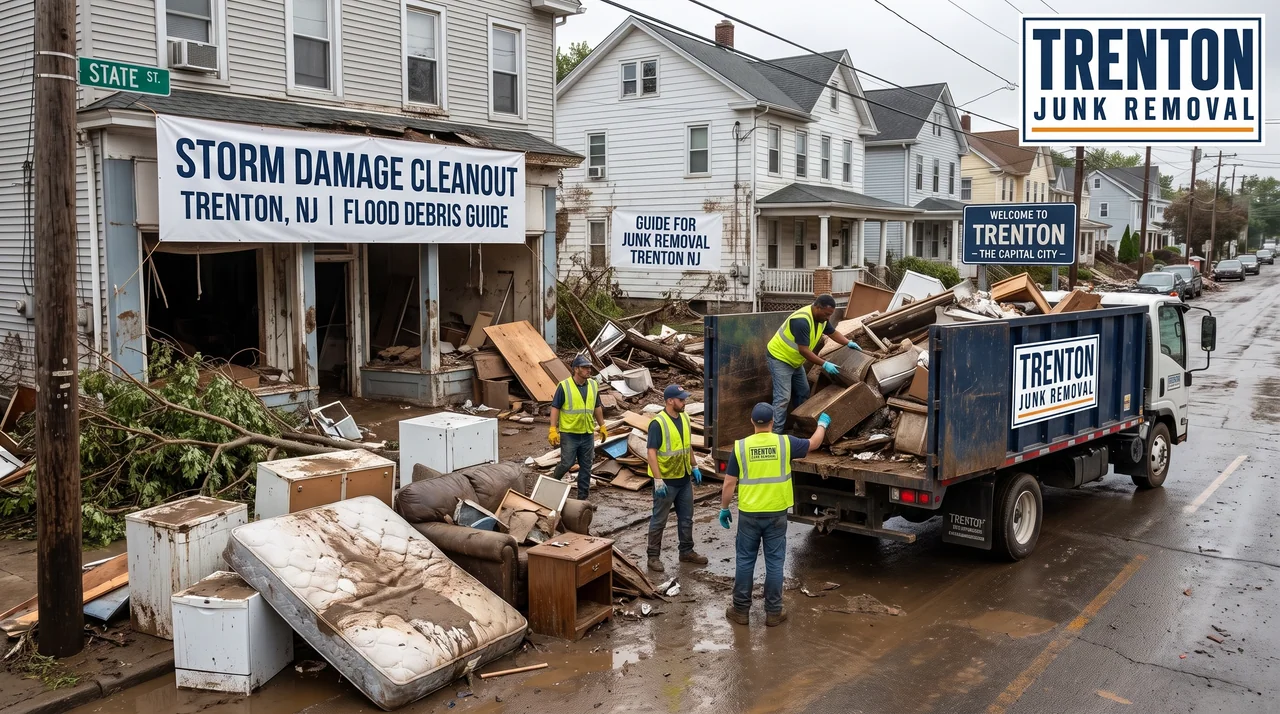
A storm damage cleanout is the process of clearing water-damaged furniture, drywall, flooring, appliances and debris from a home after a flood, nor’easter or hurricane remnant. The right order matters: safety first, then documentation for insurance, then removal of standing water, and finally hauling out ruined contents. Trenton and the surrounding Mercer County towns sit close to the Delaware River, and basements in older homes here flood more often than most residents expect.
This guide walks through what to do in the hours and days after a storm, what actually needs to be thrown out, and what New Jersey rules apply to the debris that comes out of a flooded home.
What you need to know
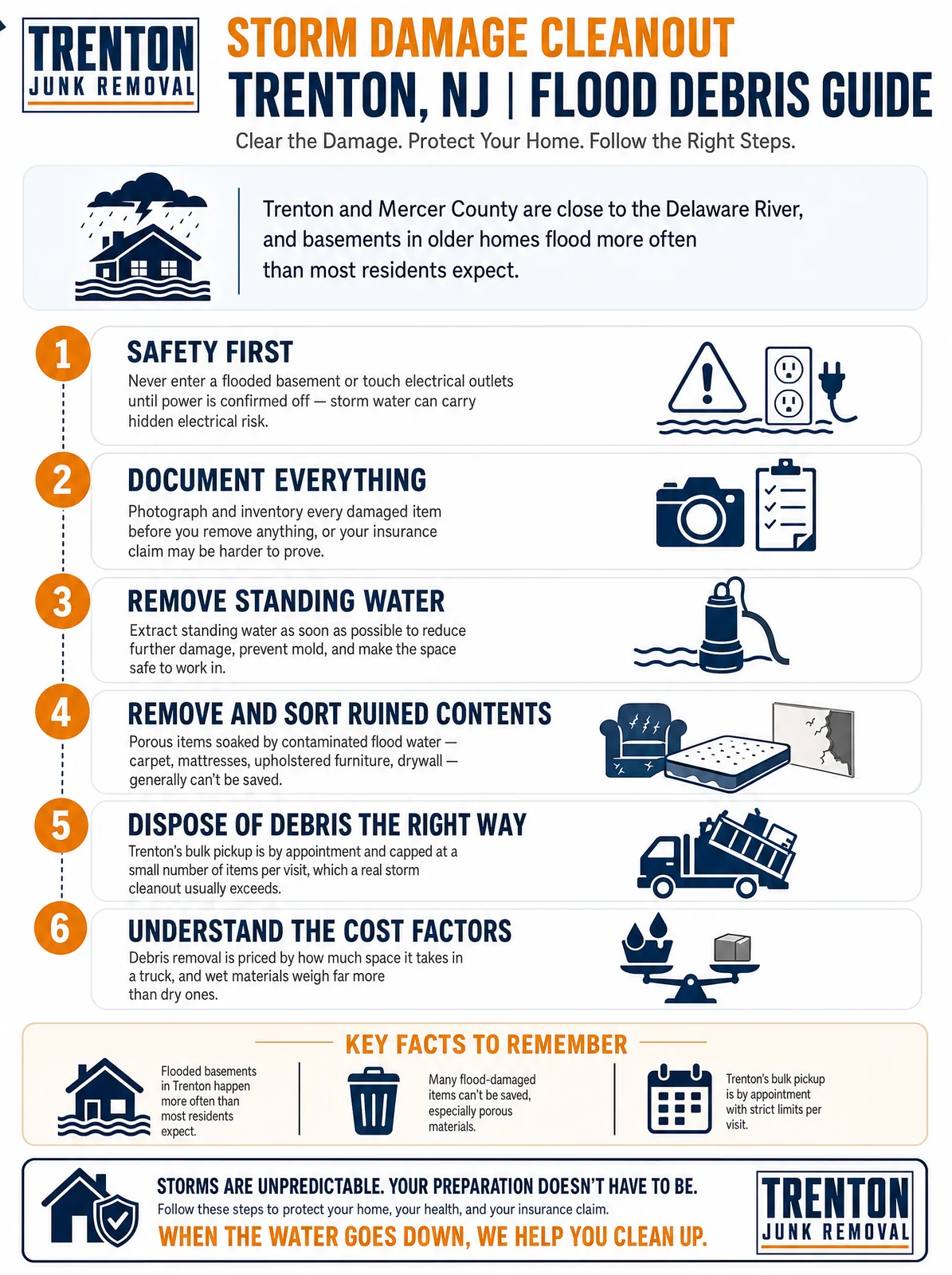
Never enter a flooded basement or touch electrical outlets until power is confirmed off — storm water can carry hidden electrical risk.
Photograph and inventory every damaged item before you remove anything, or your insurance claim may be harder to prove.
Porous items soaked by contaminated flood water — carpet, mattresses, upholstered furniture, drywall — generally can’t be saved.
Trenton’s bulk pickup is by appointment and capped at a small number of items per visit, which a real storm cleanout usually exceeds.
Debris removal is priced by how much space it takes in a truck, and wet materials weigh far more than dry ones.
What a Storm Damage Cleanout Actually Involves
Storm damage cleanout and water damage remediation are two different jobs. Remediation is drying out the structure, treating mold and repairing what’s salvageable. Cleanout is the removal stage — hauling the ruined couch, the soaked drywall, the warped flooring and the dead refrigerator out of the house so remediation and repairs can even begin. This guide focuses on that removal stage.
In Trenton and Mercer County, the most common storm-cleanout scenarios are flooded basements after heavy rain or a nor’easter, wind-torn siding and roof debris, downed tree limbs, and flash flooding from a fast-moving summer storm. Each produces a different mix of debris, but the sequence of what to do stays the same.
Your First Steps After the Storm Passes
Don’t walk into a flooded space until you know it’s safe. Follow this order:
Wait until local authorities or your utility confirms the area is safe to enter, especially if there’s standing water near the electrical panel.
Shut off electricity and gas to the affected area if water reached outlets, appliances or the breaker box, and don’t do this yourself if the panel is wet — call an electrician.
Put on gloves, rubber boots and a mask before touching anything. Flood water from a storm can carry sewage and contaminants, often called “black water.”
Watch for structural hazards — sagging ceilings, buckled flooring, or a foundation that looks cracked or shifted.
Start ventilating the space as soon as it’s safe, since mold can begin forming within a day or two of standing water.
Document Everything Before You Start Hauling
Photograph and video every damaged item, wall, and floor before you remove a single thing. Get close-up shots of water lines on the walls, serial numbers on appliances, and the overall condition of each room. Insurers typically expect proof of loss before they’ll pay a claim, and once the couch is at the curb, that proof is gone. Keep a written list alongside the photos — item, room, and your estimate of its condition — so nothing gets missed when you file the claim.
What Actually Needs to Be Hauled Out
Once the damage is documented, the removal itself usually falls into a few categories. Porous materials that trap water and grow mold are the priority: soaked mattresses, upholstered furniture, wall-to-wall carpet, and drywall or insulation below the flood line. Appliances that sat in standing water — washers, dryers, refrigerators, water heaters — are typically not safe to keep, and warped wood furniture rarely dries back into shape.
Non-porous items are a different story — metal frames, sealed plastic bins, and some solid hardwood can often be cleaned and disinfected rather than discarded. A crew that handles furniture removal in Trenton, NJ, appliance removal in Trenton, NJ, and mattress disposal in Trenton, NJ deals with exactly this mix on a normal week, storm or not — it’s the volume after a flood that changes, not the categories of items.
What You Can Save vs. What Has to Go
A simple rule of thumb helps here: anything porous that sat in contaminated water for more than a day or two should generally be discarded, since drying it out rarely stops mold from taking hold underneath. Hard, non-porous surfaces — tile, metal, sealed glass — can usually be washed and disinfected and kept. When in doubt about a specific item, it’s safer to remove it than to gamble on air quality in a home with young kids or anyone with respiratory issues.
The Cleanout Process, Step by Step
A full storm cleanout generally moves through these stages:
Confirm safety and shut off power to affected areas.
Photograph and document every damaged item and surface for insurance.
Extract standing water with a pump or wet-vac.
Remove and haul out ruined furniture, appliances, flooring and debris.
Dry out the structure completely, often with fans and dehumidifiers.
Disinfect surfaces that stayed in contact with flood water.
Begin repairs once moisture readings are back to normal.
Steps one through three are usually handled by the homeowner or a water-remediation specialist. Step four — the actual hauling — is where a dedicated cleanout crew or a dumpster rental in Trenton, NJ comes in, since it’s heavy, unpleasant work that needs to happen fast before mold sets in further.
Dealing With a Flooded Basement
Basements are the most common storm-cleanout scenario in Trenton, since most storage — boxes, old furniture, holiday decorations, spare appliances — ends up down there. After the standing water is pumped out, check for foundation cracks and confirm the sump pump actually failed rather than just being overwhelmed, since that affects what you fix before the next storm.
A single flooded basement full of soaked boxes and stored furniture is often a half-truck to full-truck volume of debris on its own. If the basement was more storage than living space, a basement cleanout in Trenton, NJ is usually the fastest way to get it emptied and dried out before mold spreads to the framing.
Where Storm Debris Can (and Can’t) Go in New Jersey
Most storm debris — waterlogged furniture, carpet, drywall — is straightforward disposal. But flooded homes often surface things that can’t go in the regular trash: soaked cans of paint, pool chemicals, motor oil, or gasoline containers that floated out of a garage. These count as household hazardous waste and need to go to a Mercer County collection event rather than the curb. Water-damaged televisions and electronics also can’t go in household trash under New Jersey law and need certified e-waste recycling instead. If you’re not sure whether something is safe to put out, the rundown of what junk removal companies won’t take covers the full list and where each item actually belongs. Fallen branches and yard debris from wind damage are a separate category too — see the notes on yard waste removal in Trenton, NJ if a storm brought down trees or large limbs on your property.
What Trenton’s Bulk Pickup Covers — and Where It Stops
The City of Trenton offers bulk item pickup, but it’s by appointment and capped at a handful of furniture items per visit — call the sanitation office to confirm the current limit before you count on it. A whole flooded basement, a wind-damaged garage, or storm debris from multiple rooms typically blows past that cap fast, which is why most residents end up calling a hauling service or renting a dumpster instead of waiting on a municipal appointment.
Should You Rent a Dumpster or Hire a Cleanout Crew?
Both are legitimate options, and the right one depends on your time and the weight of what’s coming out.
Option
Best for
Trade-off
Roll-off dumpster (20/30/40 yard)
Homeowners with time to load debris themselves over several days
You do the lifting — hard with soaked, heavy materials
Full-service cleanout crew
Getting saturated furniture and drywall out same-day, no heavy lifting
Costs more per load than self-loading a dumpster
If you’d rather load it yourself over a week, renting the container makes sense. If you want it gone this afternoon and don’t want to carry a water-logged couch up a flight of basement stairs, a crew loads it for you. Either way, wet drywall and soaked carpet weigh far more than the same materials dry, which matters for both dumpster weight limits and truck-load pricing.
What a Storm Cleanout Costs
Cost depends mostly on how much debris comes out and whether specialized water remediation is also needed. For the removal portion specifically, pricing follows the same load-based structure as any other cleanout — the full breakdown is on the junk removal prices in Trenton, NJ page, and the logic behind it is explained on the how junk removal pricing works page.
Load size
Price
Typical storm-debris equivalent
1/8 truck (minimum)
$175
A soaked mattress and a couple of boxes
1/2 truck
$395
A partially flooded basement corner
Full truck
$695
A fully flooded basement or storm-damaged garage
Full-property cleanout
Quoted from photos
Multi-room flood damage across a whole house
Wet, heavy materials like soaked drywall or waterlogged carpet can add weight-related charges beyond the standard load rate, the same way brick or concrete does on a normal job. Cash and check are billed at the listed price; card payments add 3%, and that’s disclosed before anything is scheduled, not added afterward.
When to Handle It Yourself and When to Call for Help
A small, clean-water leak affecting a few items is often manageable on your own with gloves, trash bags and a wet-vac. Call in help when any of these apply:
The water is contaminated — sewage backup, river overflow, or anything with a strong odor.
The affected area covers more than a room or two.
You can already see or smell mold starting to form.
There’s visible structural damage, exposed wiring, or a cracked foundation.
The volume of debris is more than one or two people can safely lift and carry out.
Note that water remediation (drying and mold treatment) and debris haul-away are often two separate specialists — one dries the structure, the other removes what’s already ruined.
Reducing Storm Damage Before the Next One Hits
A few maintenance habits go a long way toward keeping the next storm from turning into another full cleanout:
Install a sump pump with a battery backup so it still runs during a power outage.
Seal visible foundation cracks before they become entry points for water.
Keep boxes and valuables off the basement floor — even a couple of inches of clearance helps.
Clear gutters and downspouts every fall so water drains away from the foundation instead of pooling against it.
Know whether your property sits in a flood zone, and plan storage decisions around that.
Getting Help With Your Cleanout
Trenton Junk Removal handles storm-debris and flooded-basement cleanouts across Trenton and the surrounding Mercer County towns, including junk removal in Ewing, NJ and junk removal in Bordentown, NJ, both close to the Delaware River. Send photos of the damage and get a written price back before anything is scheduled — no on-site guessing after you’ve already carried everything up from the basement. Whether the job needs a full crew or just a dumpster to load at your own pace, both options and their prices are published on the site.
Dealing with a flooded basement or storm debris right now? Call (609) 237-2763 or send photos through our contact page for a written price before we schedule anything — or see the full storm damage cleanout services in Trenton, NJ for what’s included.
Common Questions About Storm Cleanout
What should I do first after my basement floods in a storm?
Make sure the area is safe and the power is off before you step into any standing water. Once it’s safe, photograph every damaged item and wall before removing anything, then start extracting water.
Do I need to document flood damage before throwing things away?
Yes — photograph and inventory every damaged item before removal, since insurers typically require proof of loss to process a claim, and that proof disappears once items are at the curb.
What flood-damaged items can’t be saved?
Porous items soaked by contaminated water — upholstered furniture, mattresses, carpet, drywall, insulation — generally have to be discarded to prevent mold, while hard, non-porous surfaces can often be cleaned and kept.
Can I put storm debris out for Trenton’s regular trash pickup?
Trenton’s bulk pickup is by appointment and capped at a small number of furniture items per visit, which a full storm cleanout usually exceeds. For anything beyond that cap, a hauling service or a dumpster rental is the faster option.
Where do flood-damaged chemicals and paint go?
Soaked paint, solvents, pool chemicals and motor oil count as household hazardous waste and need to go to a Mercer County collection event rather than the regular trash.
Should I rent a dumpster or hire a crew for storm cleanout?
Rent a dumpster if you have time to load the debris yourself over several days; hire a crew if you want heavy, saturated debris removed the same day without lifting it yourself.
How much does a flooded-basement cleanout cost?
Debris removal is priced by load volume, starting at $175 for an 1/8 truck and going up to $695 for a full truck, with whole-property cleanouts quoted from photos. Wet debris weighs more than dry debris and can add weight-related charges.
Is flood water in my basement dangerous?
Yes — storm and river flood water can be contaminated with sewage or chemicals, sometimes called “black water,” so gloves, boots and a mask are worth wearing before you touch anything.
Tom Brennan is the owner of Trenton Junk Removal, a family-run hauling operation in Trenton, NJ. He founded the company, approves every special quote personally, and set the written-price standard that put the full load chart — $175 for an eighth of a truck, $695 for a full one — on the website.